Border That Bleeds: Parvez Ahmad Rony’s floating crusade against border killings
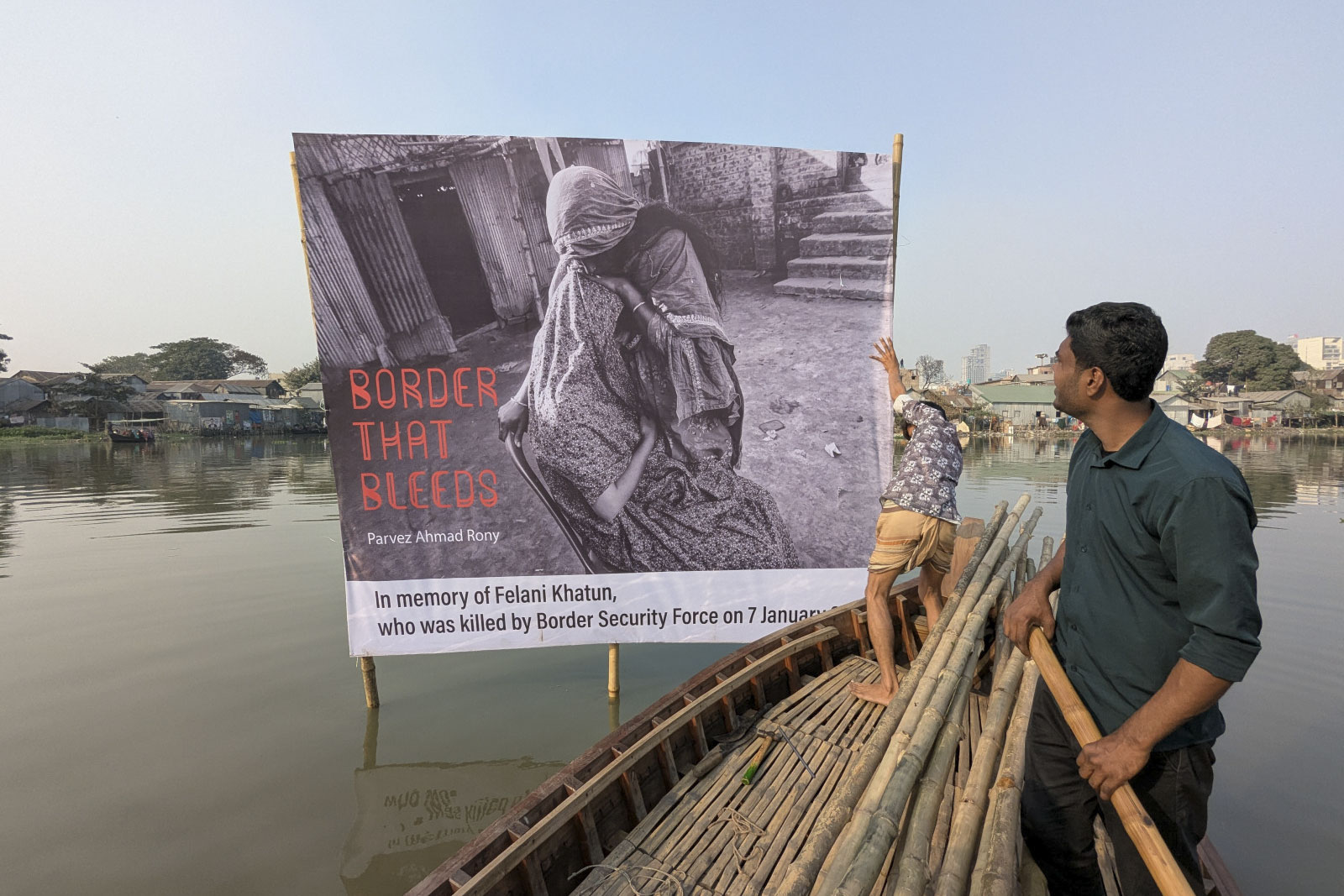
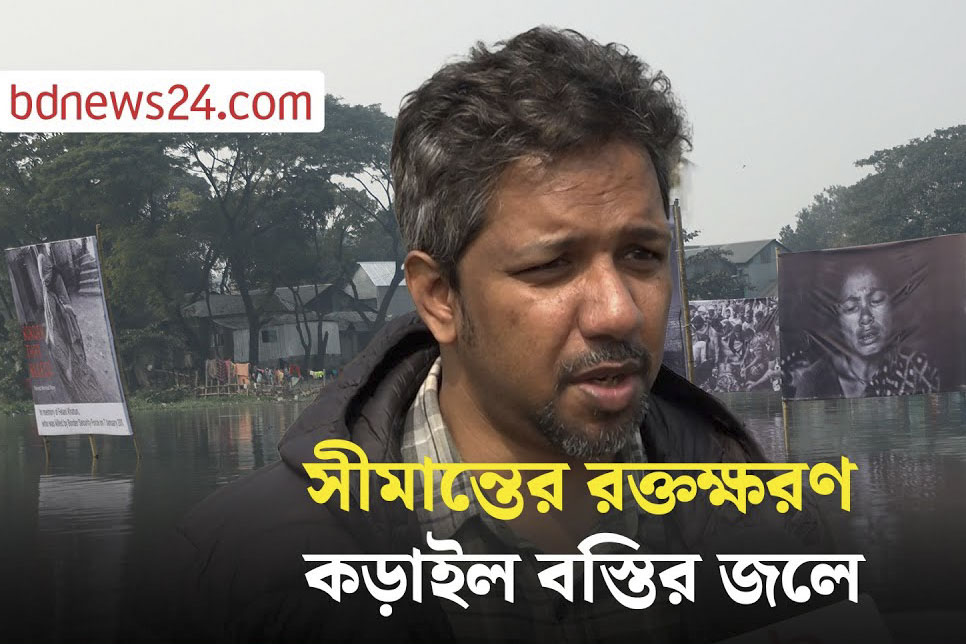
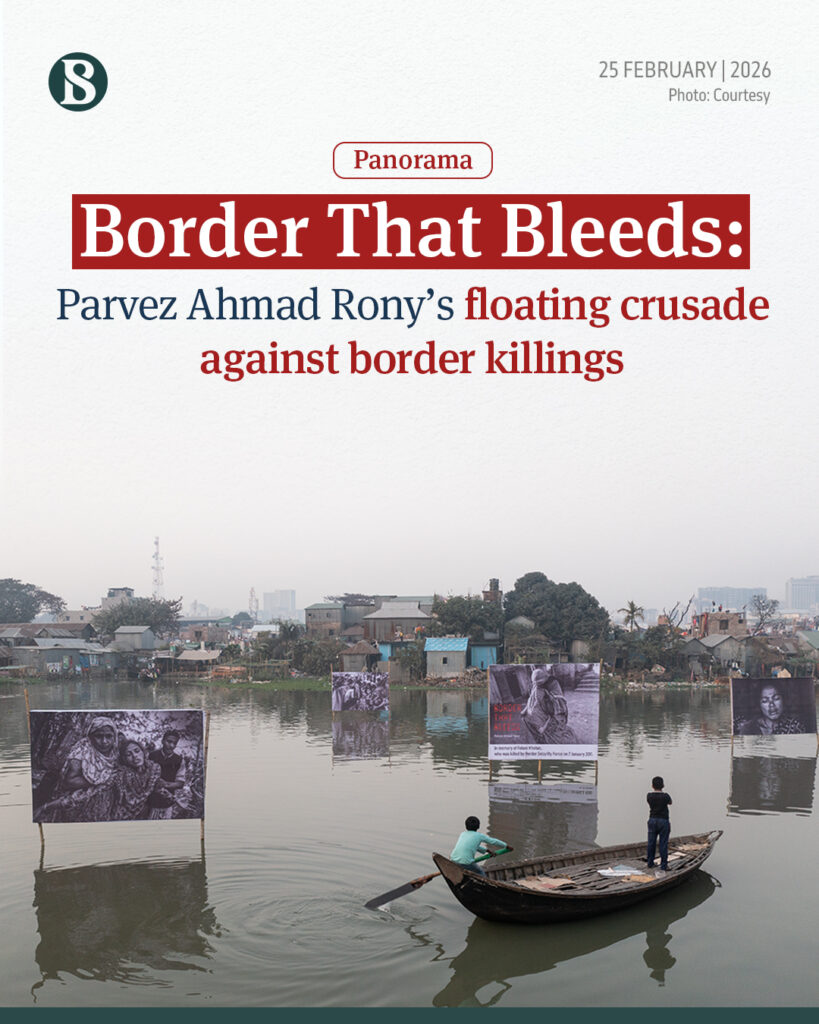
This is Border That Bleeds, the latest instalment of photojournalist Parvez Ahmad Rony’s unconventional, peripatetic exhibition. These photos have the smell of death and the piercing gaze of those who have lost everything to the bullets of the Indian Border Security Force (BSF).
“My work is deeply human-centered and they constantly questions power — it questions India, it questions how, despite repeated commitments, lethal weapons are still used along the Bangladesh border,” Rony said, “and after each killing, there is hardly any explanation, only a display of power, a kind of arrogance.”
Born and raised in Sylhet, Rony grew up in the shadow of the Jaintapur border, fascinated by the “mysterious and thrilling world” of boonga — the informal cross-border trade of betel leaves, sugar, and cattle.
However, the adventure of his youth curdled into a grim reality in 2012. He recalls watching exhausted cows being pushed down from Indian hills. When a beast collapsed from fatigue, traders didn’t see a living creature; they saw a product. They dragged it violently and slaughtered it on the spot.
“That scene deeply triggered me,” Rony admits. “It was the starting point.” From cattle, his lens naturally drifted toward the humans caught in the same machinery of profit and violence.
Beyond the “smuggler” label
Rony’s work is a direct challenge to the urban apathy that defines the Bangladeshi middle class’s relationship with the border.
According to data from Odhikar, approximately 1,356 Bangladeshi citizens were killed at the border between 2000 and 2025. In the media, these victims are almost always flattened into a single, derogatory word: smuggler.
“We scroll through headlines: ‘Smuggler killed in Hili,’ ‘Smuggler killed in Romari,'” Rony said. “But 80% of the investment for this trade comes from Dhaka. The cattle end up in Gabtoli; the cosmetics end up in Gulshan dressing tables. We use the goods, someone else risks their life to bring them, and when they die, we call them criminals.”
This hypocrisy is why Rony refuses to hang his work in traditional galleries. To him, galleries are “polished spaces that metaphorically wash the blood off people’s hands.” They normalise injustice by making it aesthetically pleasing.
Instead, he takes the images to the people.
He has exhibited in the courtyard of Felani Khatun’s home – whose hanging corpse on a barbed-wire fence became a symbol of border brutality – and in the yard of Bipul, another victim of the BSF. Since its inception in 2020, Border That Bleeds took place from Raju Sculpture at Dhaka University to the elite walkways of Justice Shahabuddin Park.